Background Circle Background Circle

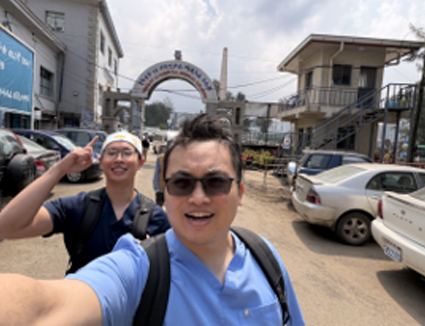
By: Steven Du and Phillip Nguyen (2026 International Fellows, The Medical College of Wisconsin (MCW), Milwaukee, Wisconsin, USA)

Medical students, international fellows from the USA

Our Adventures in Ethiopia – Filimon & Estifanos


Ethiopia, the cradle of civilization. It was the place where we took our first steps on the African continent, uncertain of the journey ahead of us, and left feeling like we had become part of the Habesha family.We had the honor of being selected as research fellows for the HEARTS project, and to say that we left with full hearts and unforgettable memories would be an understatement.


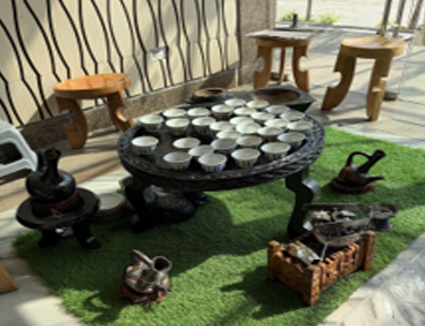
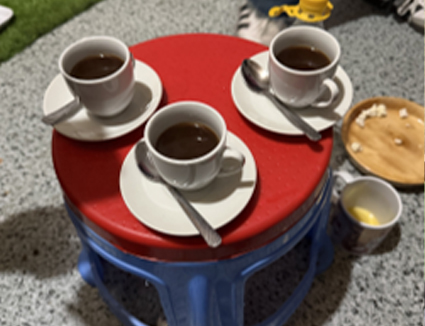
Ethiopia is well known for its buna, or coffee, but we quickly learned that drinking buna is not simply a quick cup of coffee like it often is in the States. Rather, it is a full and immersive experience. The Ethiopian coffee ceremony is a time of social connection, similar to tea time in other cultures, where people sit down, remain present, and build relationships through mindful conversation. The ceremony is traditionally made up of three distinct pours: Abol, Tona, and Baraka. Each pour carries its own meaning, and in many ways, each stage reflected a different part of our journey in Ethiopia.

Buna Ceremony – Ethiopian Coffee Ceremony

Abol – The First Pour

The Abol, the original first pour and the strongest of them all, is the welcoming. This is where our story in Ethiopia begins.

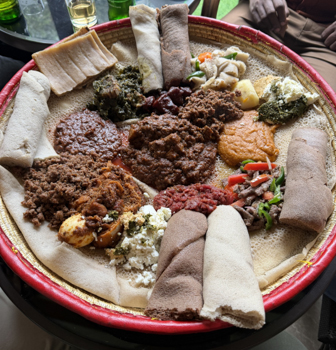
Similar to how the first cup of coffee hits the hardest, our first week in Ethiopia was greeted by an unforgettable case of traveler’s diarrhea. Eager to immerse ourselves in the culture and food, we set out to try different Ethiopian dishes. Ethiopian food is unique for its injera, a fermented sour flatbread used to scoop up delicious wots or stews, tibs or meats, gomen or leafy greens, and kitfo or minced meat.

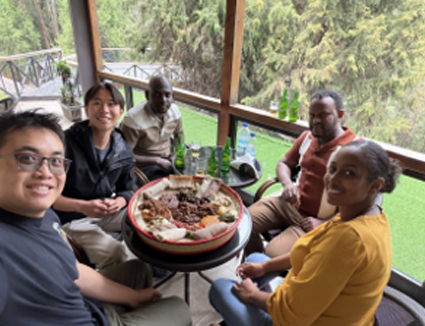
A traditional beyaynetu consisting of a variety of traditional Ethiopian foods, including injera, kocho, kitfo, shiro, tibs, and more

Through food, we began to learn how each dish carries its own history and reflects the stories of Ethiopia’s more than 80 cultural groups. Rather than being defined by a single identity, Ethiopia is home to a rich diversity of communities, each with their own traditions, customs, and ways of life.

We also found comfort in familiar foods in a new place, including incredible Chinese food and hand-pulled noodles, which reminded us that even far from home, food has a way of making a place feel familiar.

In addition to our gastrointestinal struggles, we began learning about the Ethiopia Hospital Emergency Assistance Response Tracking System, or HEARTS. On our first workday, we entered the office excited to learn how we could contribute to the project and help advance the system. However, we quickly ran into a major problem: we did not fully know what HEARTS was.

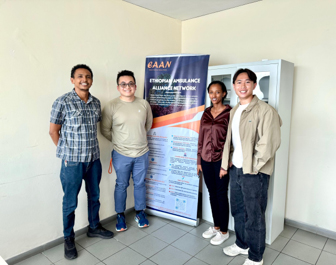
First Day in the N4pCC office.

This led us to ask many questions during our first week. What is the purpose of HEARTS? Who uses HEARTS? What stage of implementation is HEARTS currently in? Before we could help solve a research problem, we first had to understand what the problem was.


Slowly, we began to develop a better understanding of the prehospital care landscape in Ethiopia. Ethiopia’s prehospital system is fragmented across public, private, and nongovernmental organization providers. HEARTS was created as a digital emergency coordination system that integrates providers and patients into one platform to improve dispatch coordination and emergency response documentation.


From our scoping review and early conversations, we developed our research question: What is the operational performance of HEARTS, and how do providers perceive the system? With our research focus beginning to take shape, we moved into the Tuna stage of the jebena ceremony, where the coffee becomes slightly lighter and sweeter, and the conversations begin to deepen.

Tona– The Second Pour

The Tona, the second pour of the buna ceremony, represents a deeper stage of connection. As we continued building the methods for our HEARTS project, we also had the privilege of gaining clinical experience in Addis Ababa and Hawassa.


At Yekatit 12 Hospital, we joined the general surgery team, rounded with the residents, and observed a wide range of surgeries, from open cholecystectomies to a full Whipple procedure. Shadowing in the hospital was an eye-opening experience that showed us how healthcare providers can deliver quality patient care, even in resource-limited settings.


Water bottles being used to collect urine, IV bags hanging from chains, and a makeshift spirometer made from a glove and tubing were just a few examples of the team’s remarkable resourcefulness. Many of the procedures we observed were open surgeries, which allowed us to fully visualize each step and better understand how operations were performed before minimally invasive techniques became more common.

We also had the opportunity to travel to Hawassa and meet the general surgery team at Hawassa University Comprehensive Specialized Hospital. As soon as we left the airport and took in our surroundings, we quickly realized how different Hawassa felt compared to the bustling city of Addis Ababa. Given how rural the surrounding area was, we expected the hospital to have even more resource limitations than Yekatit 12. However, we were pleasantly surprised by how large the hospital was and by the many specialties available, including psychiatry.


The hospital had also recently undergone extensive renovations in collaboration with international partners, resulting in more advanced operating rooms that could better support surgical care for the surrounding community. During morning rounds, we noticed that the hospital had many gastrointestinal cases, similar to what we had seen in Addis Ababa, which left us wondering what factors may be contributing to the high burden of GI conditions in Ethiopia.


The most memorable part of our clinical exposure, however, was not only what we saw in the hospital. It was the time spent talking with and building relationships with the residents.

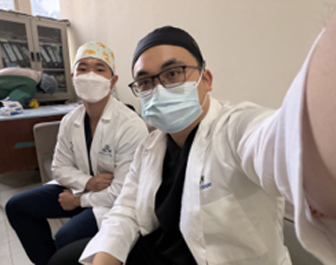
First day observing in the OR at Yekatit 12.

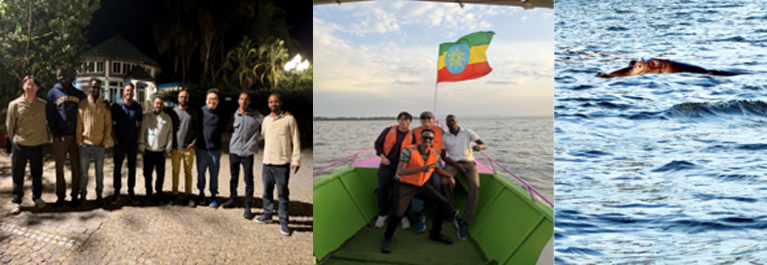
Hawassa Hospital Resident Team and Finding Hippos.

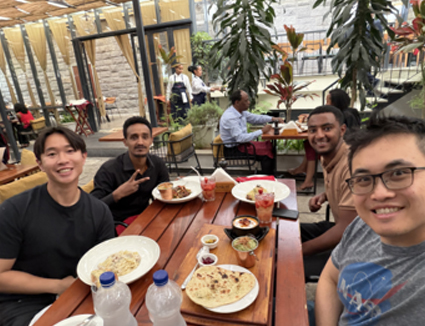
Over dinner and hippo watching, we talked about our families, hobbies, and future aspirations. Through these conversations, we learned more about the challenges residents face in Ethiopia, including going months without pay and struggling financially to provide for their families. We also learned about the barriers residents face when trying to pursue medical opportunities abroad, such as the high cost of board exams and the lack of testing availability within Ethiopia.


These conversations showed us how difficult it can be to become and remain a physician in Ethiopia. More than anything, this experience showed us the residents’ unwavering commitment to surgery and patient care despite the many hardships they face. Their dedication was deeply inspiring.


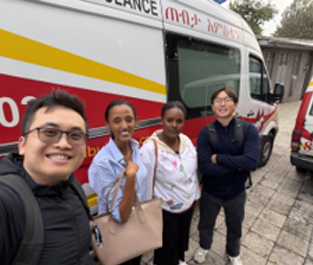
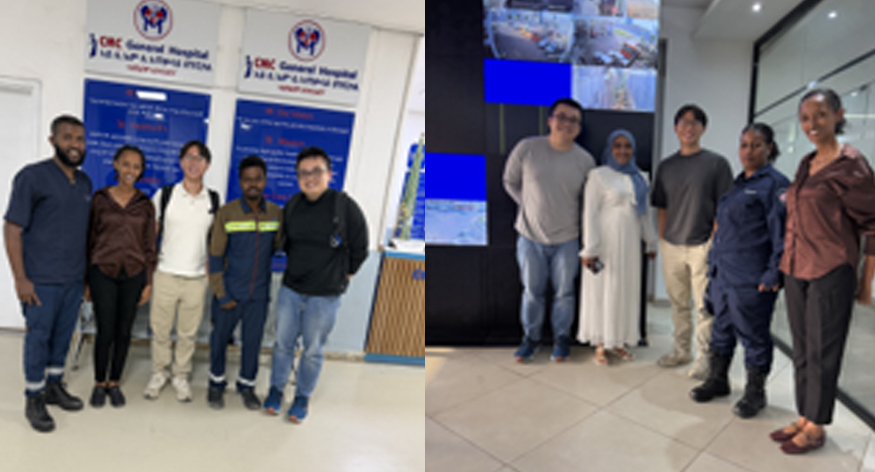
Visiting ambulance providers.

When we returned to Addis Ababa, we began the data collection phase of our research project, which included qualitative interviews. We visited both public and private prehospital providers, including the Fire and Disaster Risk Management Commission, Tebita Ambulance, and iCMC General Hospital.


During these conversations, we focused on listening to provider perspectives on the barriers, benefits, and future of HEARTS. We learned that many providers appreciated HEARTS for improving dispatch communication and streamlining EMS workflows. At the same time, infrastructure challenges, limited ambulance resources, and inconsistent network connectivity continued to limit HEARTS usage.


In addition to learning about provider experiences, we also focused on determining the operational performance of the system. We reviewed handwritten phone logs and paramedic notes from before HEARTS implementation and compared them with data quality and completeness after HEARTS was introduced.


From our research, we found that HEARTS improves emergency response data collection and supports the potential for a nationwide digital EMS system. However, our findings also suggest that substantial groundwork is still needed before expanding HEARTS more broadly. We remain committed to helping move this initiative forward.

Baraka – The Final Pour

The Baraka is the final pour of the buna ceremony. It is the blessing.


This final stage of the ceremony brings us to perhaps the most meaningful part of our time in Ethiopia: the relationships we built and the culture we were invited into.


At first, we felt completely out of place as foreigners. We looked different, stood out, and often noticed heads turning as we walked by. We were homesick. But as the trip went on, the research team, residents, and everyone we met slowly made Ethiopia feel less unfamiliar and more like home.


From being invited into an Ethiopian home for a cup of buna and a plate of injera, to learning Amharic phrases from the team such as Yimarih or Yimarsih for “bless you,” we slowly began to understand and adopt parts of Ethiopian culture. Buna time during lunch became a daily tradition and gave us a chance to learn more about the Habesha family.


We also had the opportunity to share parts of our own Asian cultures with the team, from teaching them how to use chopsticks to introducing them to beef noodle soup. Each of us has a story, and being able to learn from one another and share pieces of our lives became one of the most special parts of this trip.

With each passing day, we felt less like strangers and more like family.


We are beyond grateful for the opportunity to serve as research fellows in Ethiopia. This experience has challenged us, humbled us, and helped us grow personally and professionally. It has been an absolute blessing to become part of the N4PCC team with Fitsum, Peniel, Tesfay, Biniyam, Nathan, Wubeshet, Abenezer, Kalkidan and Yohannes, who have been wonderful hosts, teachers, and friends.


Although we will continue our medical studies back home, we fully intend to continue building HEARTS and supporting efforts to improve prehospital care in Ethiopia.


Just as beyaynetu means a mix of everything, our trip to Ethiopia was much the same. It was filled with tummy aches, parks and museums, traditional kitfo, more tummy aches, amazing surgeries, long days in the office, meaningful interviews, team meals, laughter, and countless memories.

Long days in the office can lead to some competitive ping pong matches with Fitsum and Peniel.

Most of our adventures would require a proper cup of buna to fully tell, but until then, a few pictures will have to do. Much like the traditional buna ceremony, the beginning of a new journey can be intense, but if you stay through to the end, you may be surprised by the sweet and heartwarming moments waiting for you.

Post Habesha Clothes Shopping Lunch Break.

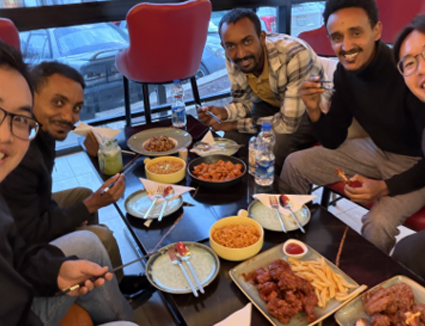
Trying Korean Fried Chicken with the N4PCc Team.

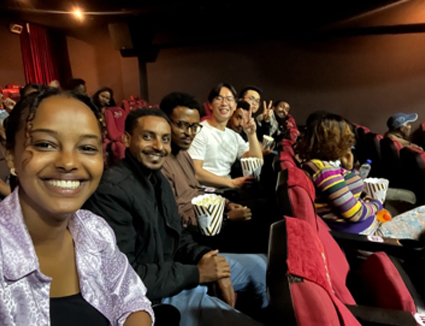
Live Ethiopian Theater – Alem Cinema

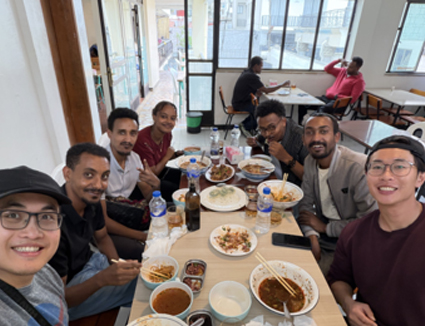
Team meals with the N4PCC team.

Residents at Yekatit 12 Hospital – Entoto Park

Baraka – the blessing, the cup of coffee you need to stay until the end.

Our last day at Yekatit 12 Hospital!

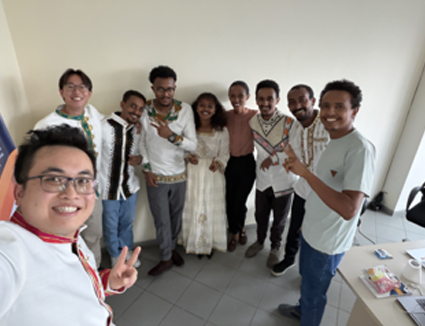
Last day team picture in Habesha clothes!

Last day team picture in Habesha clothes!

Estifanos & Filimon

bemīk’et’ilewi gīzē inigenanyi – See you next time.

Editor’s note: Throughout this newsletter, Phillip Nguyen and Steven Du use their Ethiopian names, Filimon and Estifanos, respectively. These names were given to them by their Ethiopian colleagues during their fellowship as a symbol of friendship, cultural exchange, and the warm welcome they received in Ethiopia.

Services

Project

Lorem ipsum dolor sit amet, consectetur adipiscing elit. Phasellus tristique varius elit ut finibus. Nullam sit amet urna nec lorem consequat lobortis ut in turpis.

research

Lorem ipsum dolor sit amet, consectetur adipiscing elit. Phasellus tristique varius elit ut finibus. Nullam sit amet urna nec lorem consequat lobortis ut in turpis.

documentation

Lorem ipsum dolor sit amet, consectetur adipiscing elit. Phasellus tristique varius elit ut finibus. Nullam sit amet urna nec lorem consequat lobortis ut in turpis.

Receive your NFTs

Lorem ipsum dolor sit amet, consectetur adipiscing elit. Phasellus tristique varius elit ut finibus. Nullam sit amet urna nec lorem consequat lobortis ut in turpis.

4,000+

Wallets Connected

20,000+

Collections Indexed every 5 mins.

2.5x

Difference in Floor & Estimated Value

Nerko's Roadmap

0%
Phase 01

Planning

Quality comes first. we took our time to plan out everything and build our production pipeline for a good quality artworks.

  • Release website and logo
  • Grow community
  • Launch the project
25%
Phase 02

Production

Quality comes first. we took our time to plan out everything and build our production pipeline for a good quality artworks.

  • Release website and logo
  • Grow community
  • Launch the project
50%
Phase 03

Launch

Quality comes first. we took our time to plan out everything and build our production pipeline for a good quality artworks.

  • Release website and logo
  • Grow community
  • Launch the project
75%
Phase 04

Minting

Quality comes first. we took our time to plan out everything and build our production pipeline for a good quality artworks.

  • Release website and logo
  • Grow community
  • Launch the project
95%
Phase 05

New Nfts

Quality comes first. we took our time to plan out everything and build our production pipeline for a good quality artworks.

  • Release website and logo
  • Grow community
  • Launch the project
100%
Phase 06

Metaverse

Quality comes first. we took our time to plan out everything and build our production pipeline for a good quality artworks.

  • Release website and logo
  • Grow community
  • Launch the project

Meet the team

Fitsum Kifle

GM

Peniel Kenna

---

Ermias Belay

GPISS manager

Kalkidan Kifle

statistician

Tesfay Yohannes

Bio-statistician

Asked Questions

Duis aute irure dolor in reprehenderit in voluptate velit esse cillum dolore eu fugiat nulla pariatur. Excepteur sint occaecat cupidatat proident.

Voluptate velit esse cillum dolore eu fugiat nulla pariatur. Excepteur sint occaecat cupidatat proident.

Duis aute irure dolor in reprehenderit in voluptate velit esse cillum dolore eu fugiat nulla pariatur. Excepteur sint occaecat cupidatat proident.

Duis aute irure dolor in reprehenderit in voluptate velit esse cillum dolore eu fugiat nulla pariatur. Excepteur sint occaecat cupidatat proident.

Duis aute irure dolor in reprehenderit in voluptate velit esse cillum dolore eu fugiat nulla pariatur. Excepteur sint occaecat cupidatat proident.

Duis aute irure dolor in reprehenderit in voluptate velit esse cillum dolore eu fugiat nulla pariatur. Excepteur sint occaecat cupidatat proident.

Duis aute irure dolor in reprehenderit in voluptate velit esse cillum dolore eu fugiat nulla pariatur. Excepteur sint occaecat cupidatat proident.